The Power of the Gaze: Eyes as Confession
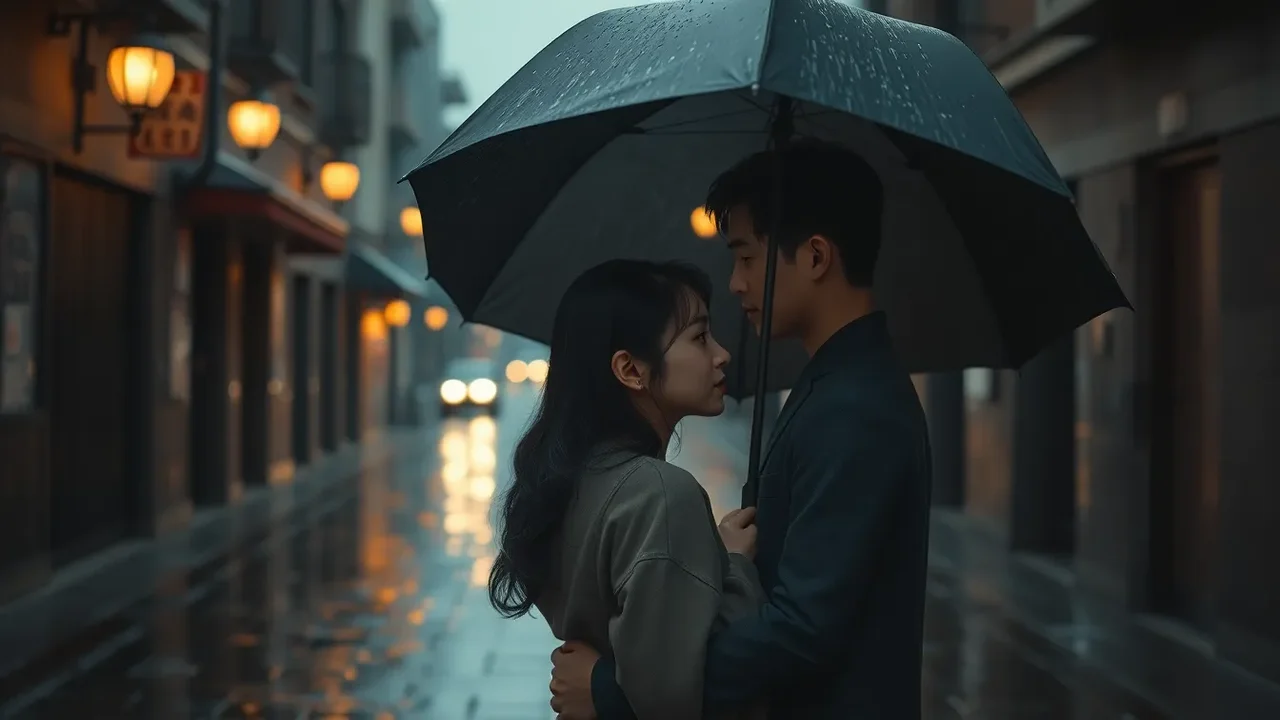
In Korean dramas, the eyes are never just eyes. They are windows to a soul that dare not speak aloud. The unspoken confession often begins with a prolonged stare, a flicker of hesitation, or a glance that lasts a moment too long. This is not mere coincidence but a deliberate narrative device rooted in the cultural appreciation of restraint. When a male lead like Kim Shin from Goblin looks at Eun-tak with a mixture of awe, longing, and sorrow, he communicates what his lips refuse to say: that he loves her despite the impossible chasm between them. Similarly, in Crash Landing on You, Ri Jeong-hyeok's gaze at Yoon Se-ri across a market stall carries the weight of an entire confession—his worry, his adoration, his fear of losing her. The viewer understands because the language of the eyes transcends spoken words. This technique works because K-drama directors master the art of the close-up. They hold the camera on an actor's face just long enough for micro-expressions to register. A slight tremble of the lip, a softening of the brow, a sudden blink that tries to hold back tears—all these become the vocabulary of an unspoken confession. It challenges the audience to read between the frames, to participate in decoding the emotion. Why is this so effective? Because it mirrors real life. We often fear rejection so acutely that we let our eyes speak instead. The K-drama gaze validates that fear while also rewarding it with eventual reciprocation. It teaches that sometimes, the most honest confession is the one that never leaves the mouth but is seen by the heart.
Acts of Service: Love in Deeds
When words fail, actions become the loudest confessions. In K-dramas, acts of service are a primary vehicle for unspoken declarations of love. Consider the iconic umbrella scene from Secret Garden where Kim Joo-won shields Gil Ra-im from the rain, walking silently beside her, holding the umbrella entirely over her head while his own shoulder gets drenched. He does not say "I care for you," but the soaked sleeve tells everything. Another classic example is in Descendants of the Sun when Captain Yoo Shi-jin gives Kang Mo-yeon his coat without a word when she shivers. The gesture is simple, but the message is profound: your comfort matters more than mine. These acts are not random; they are culturally coded. In Korean society, showing love through practical help is a respected form of affection. K-dramas amplify this by placing such acts at pivotal emotional junctures. The male lead might drive for hours to bring the female lead her favorite tteokbokki, or the female lead might secretly iron the male lead's shirt before an important presentation. Each action whispers, "I think of you when you are not here." The unspoken confession through service creates a bond that feels earned. It suggests that love is not just a feeling but a choice demonstrated through effort. This resonates with audiences because it aligns with real-life love languages. For those who struggle to articulate their emotions, doing something for another can be more genuine than a rehearsed line. The drama rewards this subtlety with narrative payoffs—the moment the receiver finally understands the intention, often through a flashback or a sudden revelation, becomes a cathartic climax. The silence of the action, once deciphered, speaks volumes louder than any confession could.
Unspoken Boundaries: The Touch That Lingers
Touch in K-dramas is a carefully rationed currency, making every instance monumental. An unspoken confession often hinges on a touch that transcends its physical boundary. The hand grab—when one character catches the other's wrist to prevent them from leaving—is a staple. In What's Wrong with Secretary Kim, Lee Young-joon's constant, deliberate touches on Kim Mi-so's hand or shoulder while adjusting her posture or fixing her hair carry an unspoken possessiveness and care. He never says "You are mine," but his fingers say it for him. The back hug is perhaps the most potent of all. When a character wraps arms around the other from behind, it is a confession of protection, vulnerability, and desire all at once. In It's Okay to Not Be Okay, Moon Gang-tae's back hug of Ko Moon-young after a traumatic episode communicates safety and forgiveness without a single word. The viewer feels the confession through the screen. Forehead touches are another powerful gesture. They imply a sacred, almost worshipful love—a confession that the other is precious and untouchable in a worldly sense. In My Love from the Star, Do Min-joon's forehead touch with Cheon Song-yi is an admission of feelings he cannot voice due to his alien nature. These touches are enhanced by the silence that surrounds them. The music fades, the background noise drops, and all that remains is the intensity of contact. The drama essentially tells the audience: pay attention, this is the confession. The unspoken quality here is not just about avoiding words; it is about the physical expression of an emotion too big for language. It acknowledges that some feelings can only be transferred through skin, warmth, and proximity. In a culture where public displays of affection are often restrained, these fictional touches become vicariously powerful. They allow viewers to experience the rush of confession without the risk of rejection, because the touch itself is both the question and the answer.
Symbolic Gestures and Objects
Objects in K-dramas become vessels for emotions too heavy to speak. An unspoken confession can be encoded in a gift, a shared item, or a seemingly mundane possession. The hair tie scene from Boys Over Flowers is legendary—when Gu Jun-pyo takes off his hair tie and puts it on Geum Jan-di's wrist, it is a claim, a protection charm, and a confession all in one. He does not say "You belong to me," but the gesture communicates ownership and care. Umbrellas, as mentioned earlier, are recurring symbols. A shared umbrella is a confession of shared space and intimacy. When a character deliberately leaves their umbrella for another to find, it becomes a silent love letter. In Weightlifting Fairy Kim Bok-joo, Jung Joon-hyung's habit of giving Bok-joo his jacket or buying her random snacks speaks his feelings long before he articulates them. Couple rings, necklaces, and even phone cases serve as public declarations. The act of giving a matching item is a confession that says, "I want the world to know we are connected." The unspoken nature lies in the absence of verbal explanation. The giver might just thrust the item into the receiver's hands and walk away, leaving the interpretation to the recipient (and the audience). The emotional impact comes from the moment of realization. Often, the receiver only understands the confession later, when they discover the significance of the object—a message carved inside a ring, a photograph hidden in a locket, or the fact that the item was the giver's most prized possession. This form of confession is deeply romantic because it requires trust in the other person's ability to eventually understand. It mirrors the real-world phenomenon of giving a gift as an outpouring of love when words feel inadequate. K-dramas elevate this by making the objects part of the narrative's symbolic web. The audience learns to watch for these tokens, understanding that each hidden love note tied to an object is a piece of the unspoken confession puzzle.
The Confession Through Silence: The Art of Timing
Perhaps the most sophisticated form of unspoken confession is the one that uses silence itself. K-dramas have perfected the art of the almost-confession—the moment when a character is about to speak but stops, leaving the words hanging in the air like a secret. This pause is deliberate. It forces the audience to lean in, to imagine what might have been said. In Goblin, the scene where Kim Shin almost tells Eun-tak he loves her but stops because he knows his death is near is a masterclass in silence. The confession is fully understood by the viewer even though the words are never uttered. Another powerful example is in Mr. Sunshine, where the male lead often catches himself before saying something too intimate, and instead offers a cryptic remark that only the initiated can decode. The timing of these near-confessions is crucial. They often occur at thresholds—doorways, train stations, bridges—places that symbolize transition. The character is on the verge of crossing a line but holds back. This restraint builds tension over episodes. The audience knows the confession is coming, but the delay makes the eventual spoken declaration (if it comes) sweeter. However, sometimes the confession is never spoken aloud, yet the characters and audience understand it perfectly. That is the ultimate art of the unspoken: love acknowledged without direct admission. This technique respects the cultural value of forbearance. In Confucian-influenced societies, blurting out feelings can be seen as immature or reckless. The long pause, the trembling lip, the look away—these signals are more respectful and often more convincing. The silence becomes a shared secret between the characters and the viewers. It makes the audience co-creators of the romance, filling in the blanks with their own emotions. This interactive quality is what makes the unspoken confession so addictive. Each near-miss heightens the desire for resolution, while simultaneously proving that love can exist and flourish even in silence.
Cultural Context: Why Unspoken?
To fully appreciate the art of the unspoken confession in K-dramas, one must understand the cultural backdrop. Korean society places a high value on nunchi—the ability to read the room and understand unspoken cues. Direct verbal confession, especially early in a relationship, can be considered rude or overbearing. The K-drama genre amplifies this cultural norm for dramatic effect. The unspoken confession aligns with the concept of jeong—a deep emotional bond that builds over time through shared experiences and subtle gestures, not through grand declarations. Additionally, Confucian values emphasize propriety and self-control. A character who blurts out "I love you" in the second episode would be seen as impulsive and perhaps less trustworthy. The slow burn of unspoken confessions allows the relationship to develop in a way that feels earned and respectful. This also mirrors the Korean entertainment industry's censorship guidelines; shows often avoid overt sexual content, so romantic tension must be conveyed through emotional and physical restraint. The unspoken confession becomes a way to express intense passion without violating broadcast standards. Furthermore, the global popularity of K-dramas suggests that this subtlety translates across cultures. International audiences find the restraint refreshing compared to Western media's often direct approach. The mystery and anticipation create a more engaging viewing experience. For example, the slow revelation of feelings in Reply 1988 keeps audiences guessing and invested for the entire series. The unspoken confession is not just a trope; it is a narrative strategy that respects character development and audience intelligence. It acknowledges that love is complicated, that timing matters, and that sometimes the most potent words are the ones we choose not to say.
Iconic Unspoken Confession Moments in K-Dramas
| Drama Title | Type of Gesture | What It Communicated |
|---|---|---|
| Goblin | Prolonged gaze with tears | Eternal love and impending loss |
| Crash Landing on You | Umbrella share in silence | Protection and unspoken care |
| What's Wrong with Secretary Kim | Hand grab at elevator | Possessiveness and desperation |
| It's Okay to Not Be Okay | Back hug after trauma | Safety and unconditional support |
| My Love from the Star | Forehead touch | Sacred love beyond words |
| Descendants of the Sun | Giving coat without speaking | Selfless concern |
| Weightlifting Fairy Kim Bok-joo | Giving her his jacket daily | Consistent, quiet devotion |
| Reply 1988 | Leaving a gift at doorstep | Friendship turning into love |
Common Techniques for Unspoken Confessions in K-Dramas
- The Lingering Gaze – Holding eye contact beyond social norms, often with a slight head tilt.
- The Touch of the Hand – A brief, accidental (or seemingly accidental) brush of fingers that both parties pretend not to notice.
- The Protective Stance – Standing slightly in front of the other, shielding from rain, crowd, or danger.
- The Shared Object – Exchanging a personal item like a hair tie, scarf, or ring that becomes a secret emblem of connection.
- The Drunken Confession – Speaking a truth while pretending to be too intoxicated to remember, allowing plausible deniability.
- The Letters and Notes – Writing down feelings but never handing them over, or leaving them for the other to find.
- The Almost-Kiss – Leaning in close but stopping at the last moment, leaving the kiss imagined.
- The Sacrifice – Taking blame or hardship to protect the other, revealing love through self-harm.
Practical Tips for Incorporating Unspoken Confessions in Your Own Storytelling
If you are a writer or creator inspired by K-drama techniques, you can adapt the art of the unspoken confession into your own work. First, establish a baseline of restraint. Let your characters demonstrate their feelings through consistent small actions before any verbal revelation. This builds credibility. Second, use environmental symbolism. A rainstorm, a train platform, a moonlit bridge—all set the stage for moments where words feel inadequate. Third, master the pause. Allow your scenes to breathe. Write silences into the dialogue and let the characters' physical reactions carry the weight. Fourth, give your characters a personal object or ritual that becomes a silent token of their bond. The audience will anticipate its appearance. Fifth, consider cultural context. Even if your story is set in a different culture, the universal appeal of unspoken love can be adapted by emphasizing what is left unsaid rather than what is declared. Sixth, reward the audience with a payoff. The eventual spoken confession, if it comes, should feel earned by the accumulated silences. If it never comes, ensure the final image or gesture communicates the love clearly enough that no words are needed. The unspoken confession is not about avoiding communication; it is about choosing a more profound, subtle, and emotionally layered form of communication that respects both the characters and the audience's capacity to infer.
FAQ - The Art of the Unspoken Confession in K-Dramas
Why are unspoken confessions so common in K-dramas compared to Western media?
Unspoken confessions align with Korean cultural values of restraint, nunchi (reading the room), and the slow development of jeong (deep emotional bond). They also allow dramas to build tension over many episodes and comply with broadcast censorship regarding overt romantic or sexual content.
What are the most iconic examples of unspoken confessions in K-dramas?
Classic examples include the umbrella scene in 'Secret Garden', the back hug in 'It's Okay to Not Be Okay', the gaze in 'Goblin', and the hand grab in 'What's Wrong with Secretary Kim'. Each uses a non-verbal gesture to convey deep emotion without spoken words.
How do directors film unspoken confession scenes effectively?
They use close-up shots of eyes and hands, slow-motion, and strategic silence with ambient sound. The camera lingers on micro-expressions such as a lip tremble or a softened gaze. Music often builds to a crescendo just as the gesture happens, then drops to emphasize the quiet between characters.
Can unspoken confessions work in real-life relationships, not just dramas?
Yes, many love languages like acts of service and quality time involve unspoken elements. However, real-life communication still needs eventual verbal clarity to avoid misunderstandings. The drama technique is best used to build romance in its early stages, not as a substitute for open dialogue.
What is the difference between an unspoken confession and a failed confession?
An unspoken confession is intentional—the character chooses not to speak but communicates clearly through action or gaze. A failed confession occurs when someone tries to speak but is interrupted or misheard. The unspoken version is a deliberate narrative device, while the failed one is often used for comic relief or prolonging tension.
Do female leads also use unspoken confessions, or is it mostly male leads?
Both genders use unspoken confessions, though the type may differ. Female leads often express through acts of service (cooking, caring) or through small gifts. Male leads commonly use protective gestures and intense gazes. Modern K-dramas increasingly balance both perspectives, as seen in dramas like 'Crash Landing on You' and 'Itaewon Class'.
The art of the unspoken confession in K-dramas utilizes subtle gestures like prolonged gazes, touches, and acts of service to convey romantic feelings without direct words. Rooted in Korean cultural values of restraint and emotional depth, these techniques build tension and intimacy, allowing love to be expressed through silence and symbolism.
The art of the unspoken confession in K-dramas is a masterful blend of cultural nuance, emotional restraint, and cinematic storytelling. It teaches us that love is not always declared with grand words but can be felt in a prolonged gaze, a silent touch, or a selfless act. These moments resonate globally because they tap into a universal truth: some emotions are too profound for language. As viewers, we are invited to read between the lines, to become detectives of the heart. The unspoken confession is not a failure to communicate; it is a higher form of communication—one that trusts the audience to understand without being told. In a world often saturated with noise, K-dramas remind us that silence can speak the loudest.
