The Foundations of the Unspoken Confession
Cultural Context: Why Words Are Not Always Needed
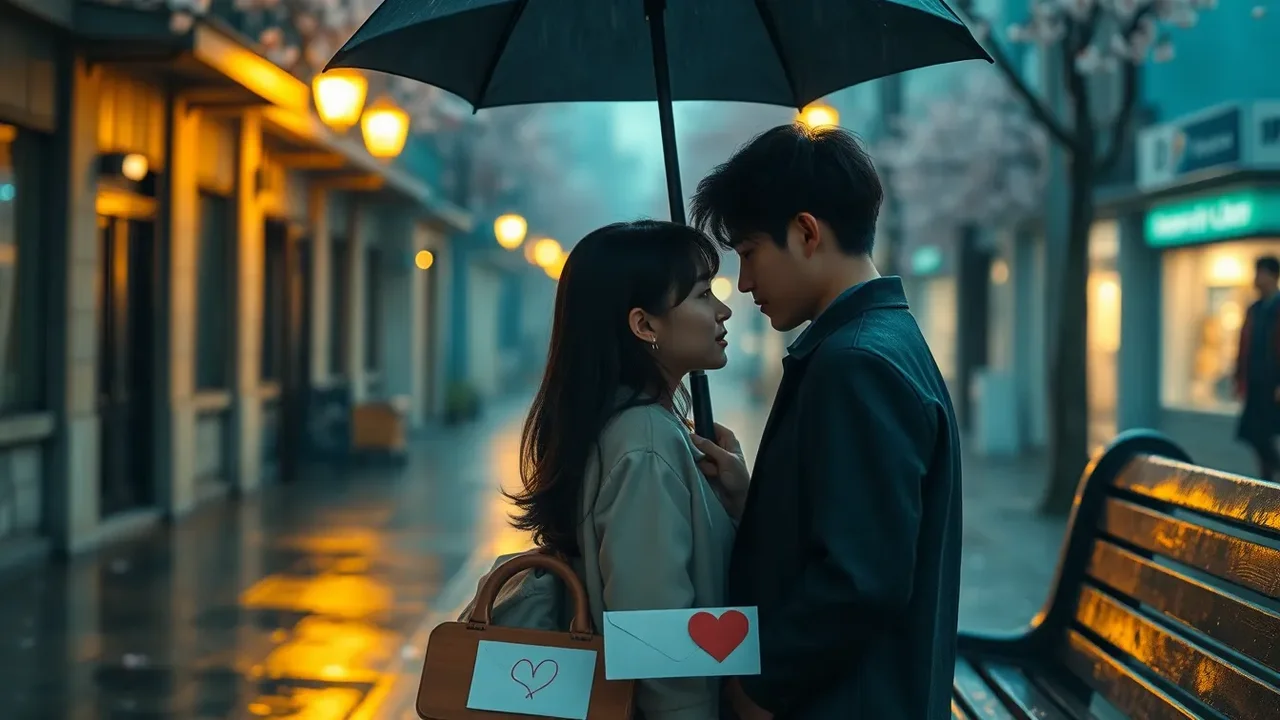
Korean society places a high value on indirect communication and emotional restraint, rooted in Confucian ideals of harmony and respect. Direct verbal declarations of love can be perceived as forward or even rude, especially in the early stages of a relationship. Instead, love is shown through actions: carrying someone’s bag, preparing a meal, or waiting in the rain. K-dramas elevate these everyday gestures into powerful narrative devices. The unspoken confession aligns with the cultural concept of jeong — a deep emotional bond that forms over time through shared experiences rather than explicit words. This makes the silent confession feel authentic to Korean viewers while also fascinating international audiences who appreciate the emotional depth.
The Dramatic Power of Silence
Silence in K-dramas is a narrative tool that creates tension, anticipation, and emotional payoff. When two characters stand in a quiet room, the audience holds their breath, waiting for a gesture or a word. The unspoken confession often occurs at a turning point: a near-death experience, a separation, or a moment of vulnerability. Directors use diegetic sound such as rain, wind, or footsteps to amplify the silence. The lack of dialogue forces viewers to focus on characters' faces and body language. This technique builds a deeper connection because the audience must actively interpret the meaning. A well-executed silent scene can be rewatched multiple times, each viewing revealing new subtleties.
Key Tropes and Techniques
The Back Hug: A Physical Declaration
The back hug is a staple of K-drama romance. It allows one character to express affection without facing the other, reducing the risk of rejection. The act itself is intimate yet safe. In Crash Landing on You, Captain Ri hugs Yoon Se-ri from behind after she almost dies—the gesture screams "I can't lose you" without a word. In What's Wrong with Secretary Kim, the male lead’s back hug signals his growing dependence on her. The back hug works because it combines protection, longing, and surrender. Directors often use slow motion and soft lighting to emphasize the moment.
The Shared Umbrella: Intimacy in Confinement
When characters share an umbrella, they enter a private world within a public space. The umbrella becomes a metaphor for shelter and care. In My Love from the Star, Do Min-joon uses his telekinetic powers to hold an umbrella over Cheon Song-yi, a silent act of devotion. In Goblin, the goblin and his bride share an umbrella in the rain, their shoulders brushing. The physical closeness forces intimacy, and the sound of rain masks whispered words. This trope is effective because it creates a natural excuse for proximity and vulnerability.
Handwritten Letters: Words That Remain Unspoken
Letters in K-dramas are time capsules of emotion. Unlike spoken words, letters cannot be interrupted or forgotten. When a character writes a letter but never sends it, the audience witnesses the unspoken confession. Reply 1988 uses letters to convey teenage love that cannot be expressed face-to-face. Hotel del Luna features a character leaving a letter before death, confessing feelings that were never spoken. The act of writing itself is a confession—the character puts their heart on paper, even if the recipient never sees it. This creates a poignant contrast between inner feelings and outer actions.
The Stare That Speaks Volumes
Eye contact is the most direct form of unspoken communication. A prolonged gaze can express desire, regret, sorrow, or adoration. K-drama actors like Kim Soo-hyun and Gong Yoo are masters of the meaningful stare. In It’s Okay to Not Be Okay, the male lead’s eyes convey a lifetime of suppressed emotions. A well-timed stare can be a confession when followed by a slight nod or a tear. Directors frame these shots tightly, eliminating distractions so the audience can feel the intensity.
Examples from Iconic K-Dramas
Crash Landing on You: The Unspoken Bond Across Borders
This drama is a masterclass in unspoken confessions. Yoon Se-ri and Jeong-hyeok’s love develops through countless silent gestures: him leaving her socks at the door, her drawing his portrait, him placing her hand on his heart. The most powerful unspoken confession comes when Jeong-hyeok, after learning Se-ri must return to South Korea, silently dismantles the fence around his house so she can leave without obstruction. His action says, "I love you enough to let you go." The drama proves that the most profound confessions are often acts of sacrifice.
Goblin: Immortal Love Without Direct Confession
In Goblin, the titular character cannot speak his love because of a curse. Instead, he shows it through devotion. He brings his bride flowers every day, waits for her after work, and silently stands guard while she sleeps. The unspoken confession culminates in the scene where he ties her shoelaces—a simple act that speaks of tenderness and commitment. The drama uses fantasy elements to justify the silence, but the emotional core remains rooted in universal human longing.
My Love from the Star: Alien’s Hesitation
Do Min-joon’s impending departure prevents him from confessing to Cheon Song-yi. His love is expressed through protection: he uses his powers to stop a car accident, he shields her from falling debris, and he watches over her while she sleeps. Each act is a silent vow. When he finally does kiss her, it is not preceded by words—the kiss itself is the confession. The drama demonstrates that unspoken confessions can build to explosive, satisfying moments of physical connection.
Mr. Sunshine: Confessions Across Boundaries
In Mr. Sunshine, set during the Japanese occupation of Korea, the romance between Eugene Choi and Go Ae-shin is fraught with political danger and personal pride. Their unspoken confessions are subtle: a lingering look across a crowded room, a hand offered for a dance, a shared silent moment under the stars. Eugene, a Korean-born American marine, cannot admit his love because of his mission and her nationalistic duty. Ae-shin cannot speak her feelings due to social constraints. Their love is expressed through small acts—he leaves her a single flower, she saves a bullet for him. The drama uses these unspoken confessions to highlight the tension between personal desire and historical necessity.
Practical Insights for Writers and Viewers
How to Execute an Unspoken Confession Scene
Crafting a memorable unspoken confession requires attention to three elements: setup, gesture, and reinforcement. Setup: Establish why the character cannot speak—fear, duty, pride, or external circumstances. Gesture: Choose a physical action that embodies the character’s feelings—a touch, a gift, a sacrifice. Reinforcement: Use music, lighting, and camera work to amplify the moment. For example, in Weightlifting Fairy Kim Bok-joo, the male lead buys his crush a pair of earrings but never gives them; he simply leaves them in her bag. The gesture is reinforced by the scene’s soft focus and a gentle piano score. Writers should avoid over-explaining; let the audience piece together the meaning.
Using Lighting and Color to Enhance Unspoken Confessions
Lighting plays a critical role in elevating an unspoken confession. Soft, warm tones create intimacy, while cool, dim lighting evokes longing or sadness. In Hotel del Luna, the use of moonlight filters enhances the melancholy of unspoken love. Color palettes also signal emotional shifts: a scene bathed in red or pink suggests passion, while blue conveys distance. Directors often desaturate the background to draw attention to the characters’ faces. For writers, coordinating the visual design with the narrative’s emotional arc ensures that the unspoken confession is felt viscerally.
Common Pitfalls and How to Avoid Them
One pitfall is making the unspoken confession too obscure. If viewers cannot understand the intent, the scene fails. Solution: use culturally recognizable gestures, such as tying a shoelace or adjusting a collar. Another pitfall is repeating the same gesture too often—vary the technique. Also, avoid contrived situations where a character could simply speak but chooses not to without reason. Ensure that the silence feels organic to the character’s personality and the story’s context.
Comparative Table: Unspoken vs. Verbal Confessions
| Aspect | Unspoken Confession | Verbal Confession |
|---|---|---|
| Emotional Impact | High — builds through suggestion and anticipation | Direct — immediate but can be less nuanced |
| Audience Engagement | Encourages active interpretation and rewatch value | Passive consumption; less room for ambiguity |
| Realism in Korean Context | High — aligns with cultural norms | Lower — may feel out of character |
| Memorability | Highly iconic — fans replay silent scenes | Less iconic; words are often forgotten |
| Time to Build | Longer — requires multiple episodes of buildup | Shorter — can be resolved in a single scene |
| Climax | Often a non-verbal gesture like hug, kiss, or tear | A verbal declaration |
List of Essential Dramas Featuring Unspoken Confessions
- Crash Landing on You (2019) — The fence removal and the umbrella.
- Goblin (2016) — Tying shoelaces, leaving flowers.
- My Love from the Star (2013) — Telekinetic umbrella, protective actions.
- Reply 1988 (2015) — Handwritten letters, shared earphones.
- What’s Wrong with Secretary Kim? (2018) — Back hugs, childhood memories.
- Hotel del Luna (2019) — Ghostly letters, silent farewells.
- It’s Okay to Not Be Okay (2020) — Fairy tale analogies, acts of service.
- Descendants of the Sun (2016) — Touch, look, silent promise.
- Weightlifting Fairy Kim Bok-joo (2016) — Earrings left in bag, secret support.
- Mr. Sunshine (2018) — Lingering looks, small gifts.
Why Audiences Love the Unspoken Confession
The unspoken confession resonates because it reflects authentic romantic experiences. Many people have loved someone without being able to say it. K-dramas honor that struggle by turning it into an art form. The slow buildup creates a deeper emotional investment; viewers feel they are part of the secret. Additionally, unspoken confessions encourage community engagement—fans discuss every glance and gesture, creating theories and interpretations. Unspoken confessions also reward rewatches; viewers notice new details each time, such as a character’s hand trembling or a subtle change in expression. This layered storytelling keeps fans coming back to dissect the drama’s emotional architecture. In a media landscape of instant gratification, the unspoken confession offers a refreshingly patient approach to love. It reminds us that the most powerful words are sometimes the ones never spoken.
FAQ - The Art of the Unspoken Confession in K-Dramas
What is an unspoken confession in K-dramas?
An unspoken confession is a narrative technique where a character expresses romantic feelings through actions, gestures, or objects rather than direct verbal declaration. Examples include back hugs, sharing an umbrella, leaving a handwritten letter, or a meaningful stare. This method relies on visual storytelling and cultural nuances to convey emotion.
Why are unspoken confessions so popular in K-dramas?
They resonate with Korean cultural values of indirect communication and emotional restraint, and they build intense emotional tension. Audiences enjoy the slow burn and the active interpretation required, making the eventual payoff more satisfying. They also reflect real-life romantic experiences where words are often difficult.
What are some common tropes used for unspoken confessions?
Common tropes include the back hug, shared umbrella, handwritten letters, prolonged eye contact, protective gestures (e.g., stopping a car), and leaving gifts or tokens without explanation. Each trope is designed to convey love without speech.
How do directors visually enhance an unspoken confession scene?
Directors use close-up shots, soft lighting, slow motion, and minimal diegetic sound like rain or wind. Color palettes are carefully chosen—warm tones for intimacy, cool tones for longing. The camera often lingers on characters’ faces to capture micro-expressions.
Can you give a famous example of an unspoken confession from a K-drama?
In 'Crash Landing on You', Captain Ri silently dismantles a fence so Yoon Se-ri can return home. His action says 'I love you enough to let you go' without any dialogue. This moment is widely praised as a powerful unspoken confession.
Do unspoken confessions always succeed in conveying the intended emotion?
When executed well, they are highly effective. However, if the gesture is too ambiguous or the context not well-established, the audience may miss the intent. Successful unspoken confessions rely on clear setup, culturally recognizable actions, and strong acting.
The art of the unspoken confession in K-dramas uses silent gestures, back hugs, shared umbrellas, and handwritten letters to convey romantic feelings without direct words. Rooted in Korean cultural values of indirect communication, these techniques build emotional tension and engage audiences in active interpretation, creating iconic moments that resonate universally.
The art of the unspoken confession in K-dramas is a masterful blend of cultural sensitivity, visual storytelling, and emotional restraint. By allowing love to be expressed through silent gestures, K-dramas create moments that linger in the hearts of viewers long after the screen fades. These confessions remind us that the deepest emotions often find their voice not in words, but in actions that speak directly to the soul.